
Laguna Beach City Directory Collections
Laguna Beach directory holdings scatter across several institutions. Orange County volumes sit beside telephone books, newspapers, census schedules, and local-history material. The National Archives lists Laguna Beach in Orange County directories for 1926, 1929, and 1931. The Library of Congress holds a Laguna Beach white and yellow telephone sequence from July 1934 through December 1948, with linked segments running to November 1960. OCPL's newspaper collection answers a different need. Its printed pages carry local names and addresses. Coverage runs from 1919 through 1989.
| Collection | Years | Where Held | Access |
|---|---|---|---|
| Orange County directories naming Laguna Beach | 1926, 1929, 1931 | National Archives inventory | Research access; publisher not stated online |
| Laguna Beach white and yellow telephone books | Jul. 1934-Dec. 1948; linked segments to Nov. 1960 | Library of Congress | Digitized images, PDF, OCR where available |
| Laguna Beach Life, Post, News Post, South Coast News | 1919-1989 | OCPL Digital Newspapers | In-library view, print, and download |
| Historical Society archives and newsletters | Newsletters 1992-present; wider holdings in progress | Murphy Smith Bungalow and research inquiry | Public programs and research access |
| Federal population census | 1790-1950 public | NARA, FamilySearch, library databases | 72-year release rule; 1950 latest public in 2026 |
| Sanborn fire-insurance maps | Laguna years not confirmed | LOC and library subscriptions | Buildings and use, not occupants |
The gaps matter as much as the holdings. No office publishes an exhaustive Laguna Beach shelf list with publishers and year runs. The NARA page names no publisher. That means a volume should not carry a commercial series label without its title page in hand. Telephone books are subscriber directories, not occupation-rich city directories. Sanborn sheet years are not stated either, so ask Laguna Beach Library Local History Room staff before assuming a missing year was never printed.
Begin a Laguna Beach City Directory Search in the Local History Room
The Laguna Beach Library at 363 Glenneyre Street is the natural first stop for a city directory search. OC Public Libraries treats the branch as a specialist Orange County history destination. Ask for city directories, telephone books, and criss-cross volumes. Clipping files, yearbooks, photographs, and vertical files round out the shelf. The public web shelf does not list every publisher, reel, or year. A staff answer is part of the source record.
The Laguna Beach Historical Society adds a second layer. Founded in 1989, it keeps documents, books, memorabilia, photographs, videos, publications, and community experts at the Murphy Smith Bungalow, 278 Ocean Avenue. Hours run Friday through Sunday, 1 to 4 p.m. Newsletters date from 1992 forward. Its research-your-house route links GIS, the pre-1940 Historic Resources Inventory, city preservation files, the library, and Orange County Archives. The Historical Society describes the local collection layer behind the Laguna Beach historical shelf.
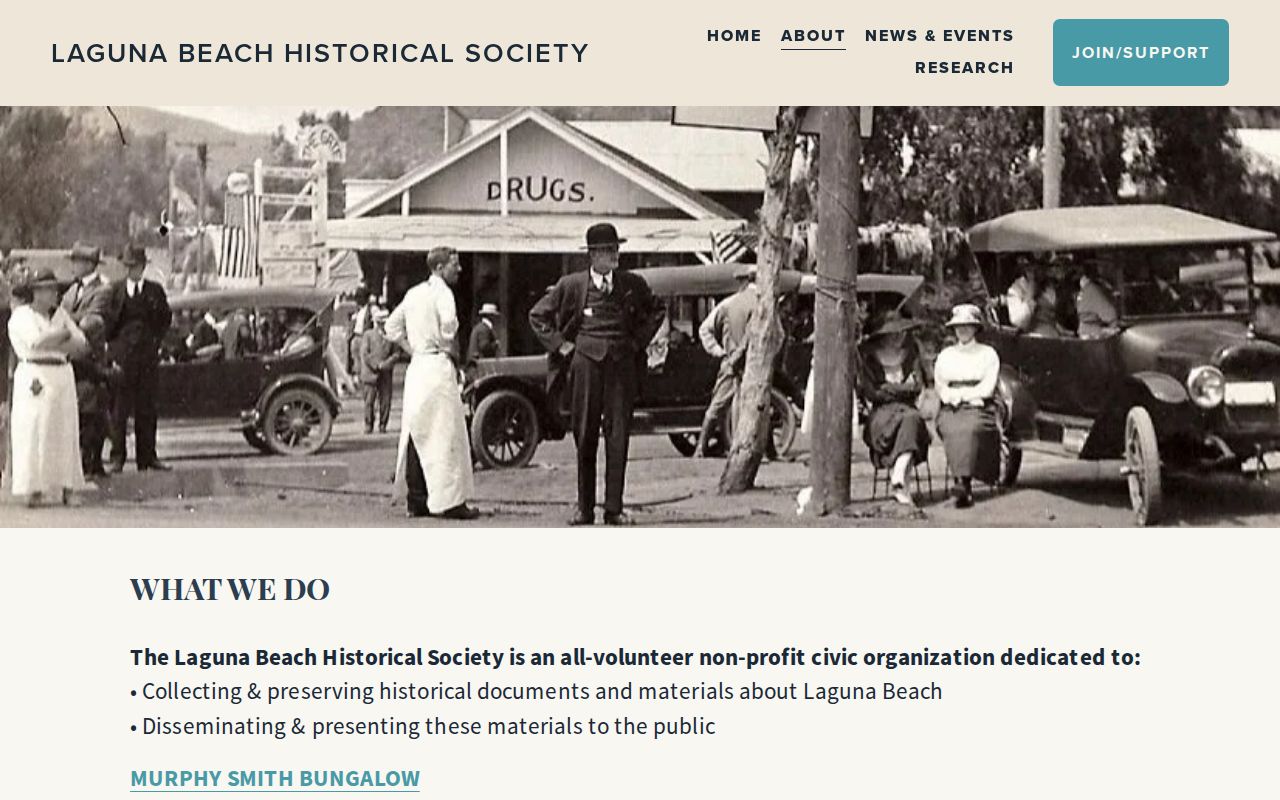
The archive is still being cataloged. One inquiry can surface context a keyword search misses. Treat each photograph, clipping, and newsletter as a dated clue, and preserve its collection description.
Use Newspapers Beside Laguna Beach City Directories
OCPL Digital Newspapers gives local research its strongest continuous online lead. Four titles appear there. Laguna Beach Life, Laguna Beach Post, Laguna News Post, and South Coast News can be viewed, printed, and downloaded from 1919 through 1989. Search a surname with initials, a spouse, a street, a club, or obituary terms. Social columns help most. They can place a household at an address for a date the directory omits.
Newspapers cannot replace a certified vital record or deed. Family-supplied details can carry errors, and a business notice may describe a workplace or event rather than a home. Check important identifications twice. Compare them with a title instrument, court file, census schedule, or a copy from the Clerk-Recorder. OCPL's digitized newspaper catalog provides the 1919-1989 Laguna bridge.

Four titles make a directory gap easier to test. A name missing from one paper may surface in another title, a later issue, or the branch's microfiche.
Follow the Laguna Beach City Directory Trail from NARA
The National Archives names Laguna Beach among the Orange County places in its 1930 directory-volume inventory, covering 1926, 1929, and 1931. Those three years bracket incorporation. The 1926 volume precedes Laguna Beach's June 29, 1927 incorporation. The later volumes capture its first municipal years. NARA names no publisher on the page, so check the title page before describing a volume further.
Search the alphabetic section for a surname first. Then inspect the street section when present. Record the printed address, abbreviations, spouse or occupation notes, and neighboring entries. A directory captures one publication snapshot. It may omit an unlisted household member, change a street form, or use a municipal heading that differs from a current map. NARA's city-directory inventory is the source for the three documented Laguna Beach years.
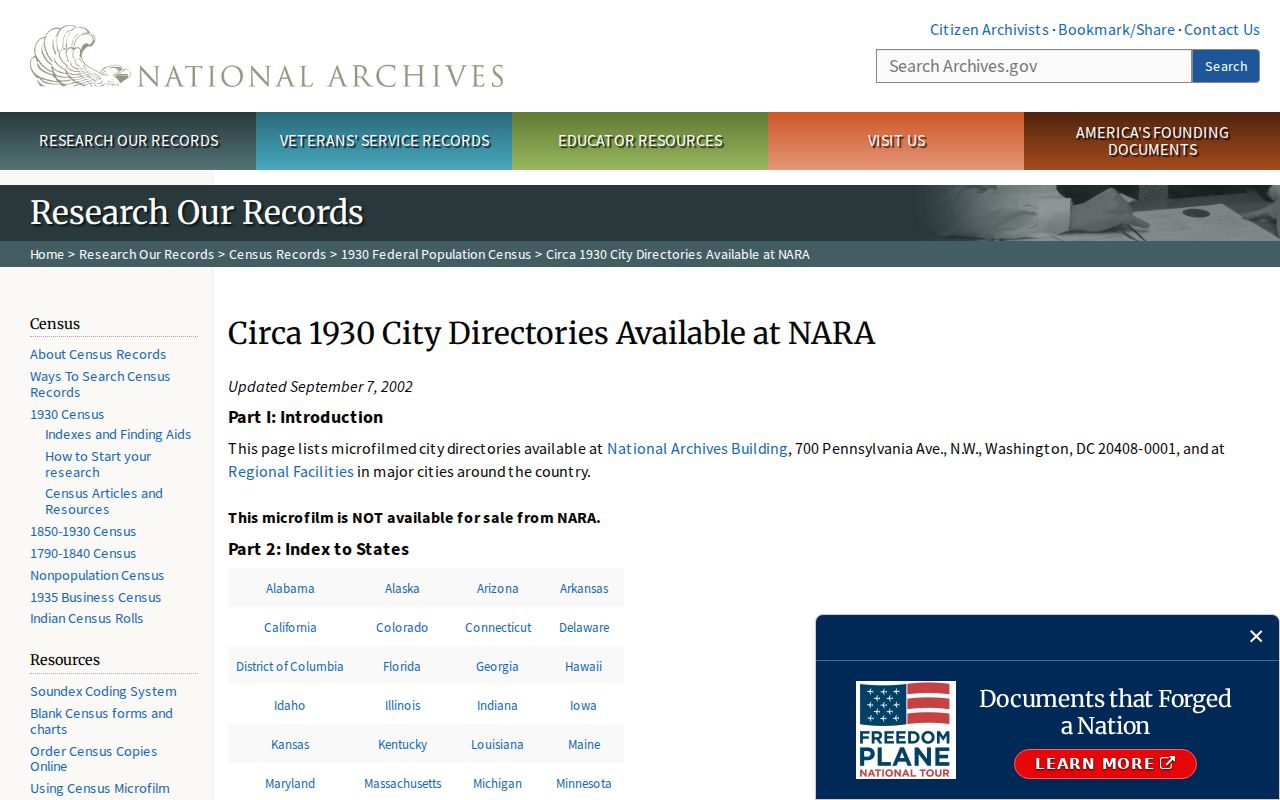
That inventory beats a guessed publisher name for any local shelf volume.
Reading a Laguna Beach City Directory Entry
A true city directory entry can carry more context than the digitized telephone books. Local holdings need checking volume by volume. A researcher may find a name, occupation, spouse or family note, and street address. A mark can flag a business or boarding house. The Library of Congress sequence is narrower. Its white pages expose subscriber surname, given name or initial, street text, exchange, and phone number.
| Subscriber name | Printed surname and given name or initial in a telephone directory. |
|---|---|
| Street and number | Address text as printed; retain abbreviations and directional words. |
| Exchange and phone | Telephone identifier that can link consecutive issues, but not every household member. |
| Business line | Business name, category, address, and phone in a yellow-page or business listing. |
| Classic-directory fields | Occupation, spouse, occupancy mark, and widow notation are not reliable in the LOC books and must be verified in a local volume. |
- Criss-cross section
- A street-order section that lets a researcher start with an address and work toward a householder.
- Householder index
- An alphabetical finding aid for the primary listed person at an address, not a full household census.
- Abbreviation key
- The volume's guide to short forms and symbols. Photograph or transcribe it before reading entries.
- Subscriber
- The person or business attached to a listed telephone line, not automatically every resident at the address.
The LOC image and OCR layer publish no named Laguna Beach entry suitable for quoting. No invented name belongs in a historical-directory article.
Follow the Laguna Beach City Directory Telephone Sequence
The Library of Congress holds a Laguna-specific telephone directory run in six linked spans. They cover July 1934 through December 1948. Next come June 1949 through November 1952 and November 1953 through November 1956. Later spans run November 1957 through November 1958, November 1959, and November 1960. Open the segment you need inside the image browser. Switch among image, PDF, and image-with-text views as you go. The white pages are alphabetical, so work through them letter by letter. Copy the printed exchange and abbreviation exactly as shown.
A name may vanish between issues. Search the next segment before drawing conclusions. A changed number can signal a line change. It can also point to an unlisted subscriber, a business category, or a household move. The Yellow Pages help separate a gallery, hotel, or studio from a private listing. Treat a suspected address change as a lead only. Route it to newspapers, deeds, and the NARA volumes rather than as proof. The Library of Congress image browser carries the digitized Laguna Beach telephone sequence.
Place Laguna Beach City Directories on a Timeline
Directory dates are not a continuous record. A timeline keeps them honest. Laguna Beach sits in Orange County, which formed from Los Angeles County in 1889. The 1926 NARA directory precedes city incorporation, while the 1929 and 1931 volumes capture the early municipal years. The LOC telephone run spans 1934 to 1960. OCPL newspapers run from 1919 through 1989, and the 1930, 1940, and 1950 federal censuses add household snapshots inside that span.
| 1919 | OCPL's documented Laguna newspaper run begins. |
|---|---|
| 1926 | NARA lists Laguna Beach in an Orange County directory before incorporation. |
| 1927 | Laguna Beach incorporates on June 29. |
| 1929 and 1931 | NARA lists additional Orange County directory years naming Laguna Beach. |
| 1934-1960 | LOC telephone-directory segments cover the documented Laguna sequence. |
| 1950 | Latest public population census in 2026 under the 72-year release framework. |
Modern research works differently. Recorded deeds, OnBase property files, and the city permit portal replace the printed directory as the official address trail after the historical era. Still, the old shelf stays valuable for tracing people who never owned property. The National Archives census research page supplies the household-era context for the directory timeline.
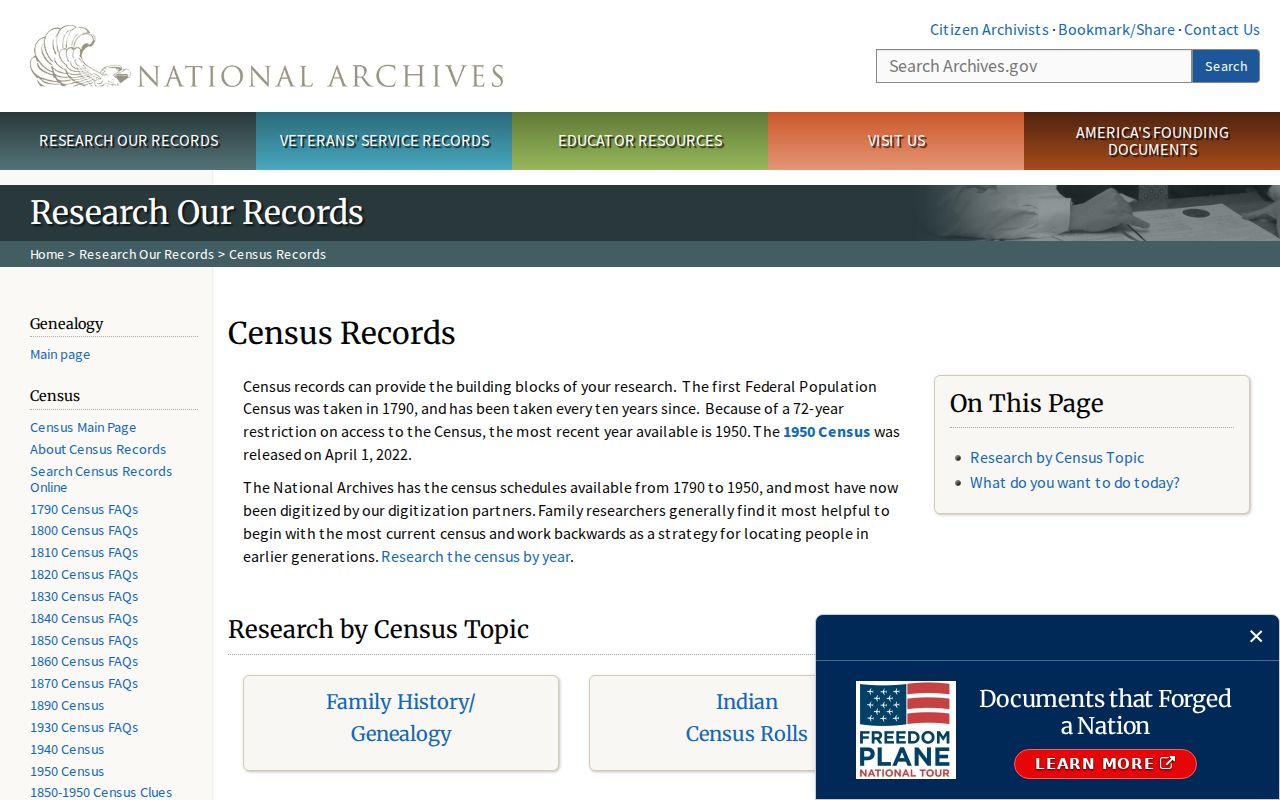
Census images anchor the fixed decades. For year-to-year address clues, the printed directories still do the finer work.
Trace Laguna Beach Families Through the City Directory
Pair a Laguna Beach directory with the public census for the strongest results. Pick the directory year closest to a known event. Note the surname, initials, address, spouse or occupation detail, and every abbreviation. Check the street section for neighbors or alternate spellings. Then compare the 1930, 1940, or 1950 census household. Use the same address or legal neighborhood.
- Find the first directory appearance near the event date and copy the entry exactly.
- Move one edition or telephone segment at a time, noting address, exchange, and spelling changes.
- Use the street-order section to test nearby entries and the householder sequence.
- Pair directory evidence with the matching public census, allowing for enumeration-district and boundary changes.
- Use OCPL newspapers, obituary notices, cemetery material, deeds, or probate to explain the first and last appearance.
A disappearance has many explanations. It can mean a move or a death. It can also mean an unlisted line, a publication omission, a new street form, or a boundary change. A newspaper notice may reveal a marriage or death. A deed may show a transfer without naming anyone in the household. The census can even capture a family the directory missed. The collections remain the heart of the Laguna Beach historical shelf. Current parcel work belongs in the address directory. NARA's census access rules explain why 1950 is the latest public schedule in 2026. The federal census provides a household comparison point, not a continuous resident directory.